innovative rainwater harvesting
Rainwater is part of the never-ending Water Cycle.
Between the seas, clouds, rain, hail, snow and the system of streams and rivers no drop gets lost and no new drop is made.
However, saving fresh and drinking water makes sense from both an economic and an environmental viewpoint. It is part of our drive towards a sustainable society. Water may seem to flow endlessly from our taps, but its delivery and purification requires more and more energy, more effort and so more expense.
Drinking water is our most important food. The average British household uses around 150 litres of water a day, but as little 50% of it needs to be of potable quality, for the preparation of food and drinks and at the kitchen sink.
For many uses we just don't need high quality drinking water. For toilet flushing, washing machines, for cleaning and garden watering you can safely use filtered rainwater, with the help of the right rainwater equipment, properly installed.
This means that half of the drinking water used can be saved without any reduction in hygiene and comfort.
Other benefits of using soft rainwater:
- More efficient washing, saving up to 50% on washing powder.
- Washing machines don't become furred up with lime.
- No lime scale/salt build up in toilets and urinals.
- There is no better water for your garden and plant irrigation.
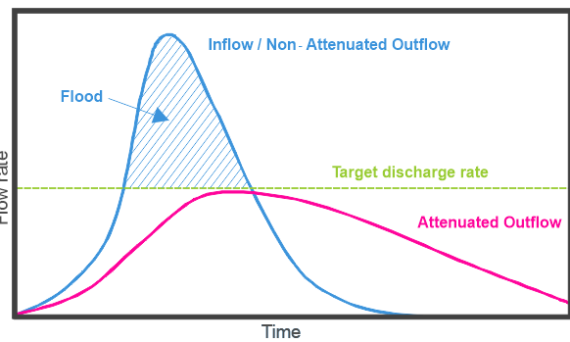
- A major contribution to Sustainable Drainage Systems, helping to alleviate flooding and runoff problems.
- Reduces pressure on the water environment, and reduces burden on stretched water supply and sewerage systems.
- Saves us all the energy and carbon consumed in the production of treated water.
- Saves you money on your metered water bill.

|
 |
clean water - our mission!
|
All professional rainwater systems must include 4 cleaning steps if they are to deliver clean water year after year. 3P Technik’s policy of continuous innovation means that we can offer the widest choice of components covering all 4 steps in the cleaning of rainwater. If you think we haven’t got what you are after, contact us, as our range is vast and constantly being enhanced.
1. Cleaning step
» Filter
The first cleaning step in the rainwater system is
the filter. The rainwater flows from the roof to the
filter. Here dirt particles and debris are separated
from the water. The cleaned water flows to the tank.
The dirt is washed to the stormwater pipe or soakaway with a
small amount of rainwater. All 3P rainwater filters
have stainless steel inserts, which are easy to remove
and easy to clean. Their many different working
principles and connection possibilities allow for
their use in many different installation situations.
|
2. Cleaning step
» Calmed Inlet
By using an underground tank, the water is stored in
dark and cool conditions. Here the second cleaning
step takes place. In the water column, any fine
residual particles settle to the bottom of the tank.
The rainwater Calmed Inlet prevents any disturbance
of this sedimentation layer. At the same time the
Calmed Inlet ensures that oxygenated water is
introduced to the lower layers of the stored water in
the tank. This oxygen rich water prevents anaerobic
reducing conditions forming in the storage tank
and ensures that the water stays fresh.
|
3. Cleaning step
» Overflow siphon
Any particles that are lighter than water
(e.g. flower pollen) float slowly to the water surface.
The expertly designed 3P Overflow Siphon, with
a skimmer effect, removes this floating layer.
The regular overflow from the storage tank is
important to get the optimum water quality.
It prevents souring of the water. The floating layer
could otherwise build up over time, and so reduce
oxygen diffusion at the water surface, which in turn
could lead to anaerobic reducing conditions in the tank.
|
4. Cleaning step
» Floating Pump Intake
The 3P Pump Intake floats at all times,
suspended just below the water surface
where the cleanest water lies.
From this position the water is abstracted
by the pump.
A ball float, filled with air, suspends the intake,
which has a further filter and a check valve.
|
|